Ground Chicken & Peas Dog Meal – Simple, Protein-Packed Homemade Food
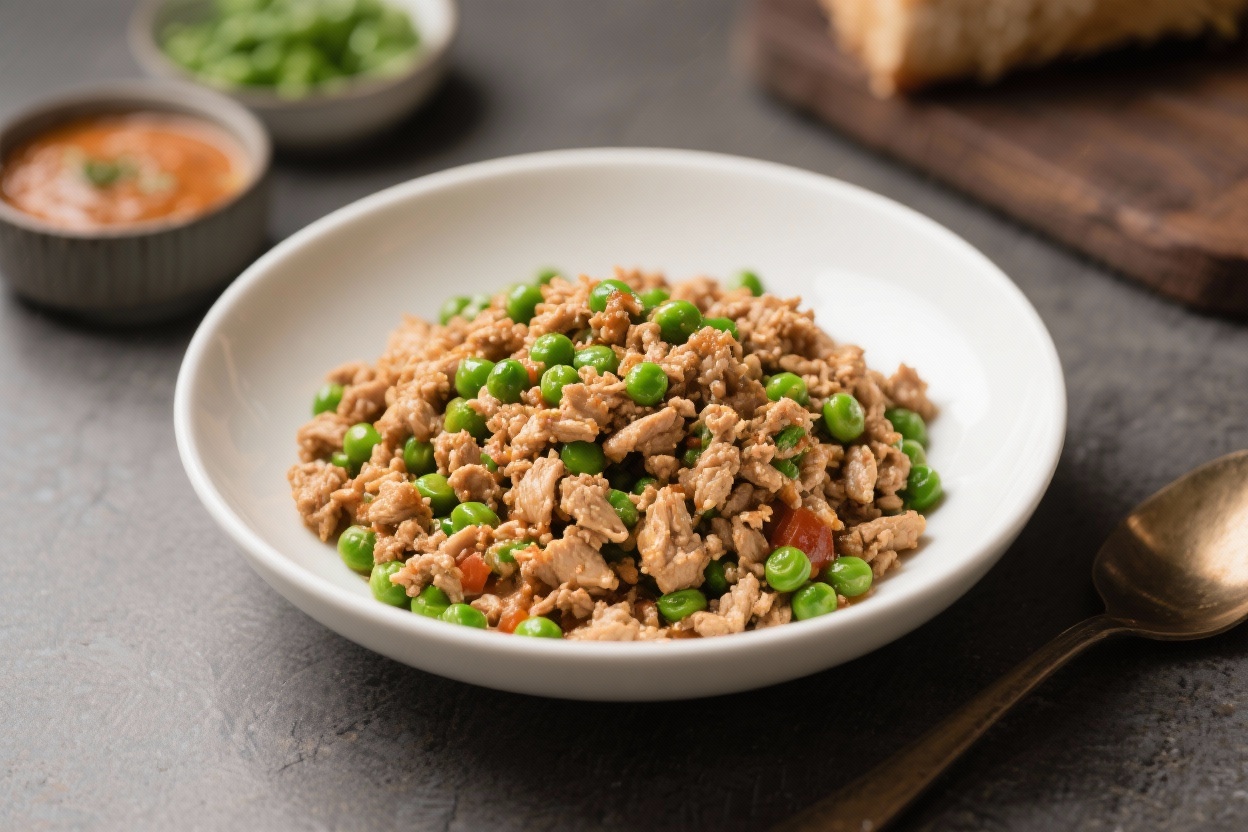
This recipe keeps things straightforward: lean ground chicken, sweet peas, and a few gentle add-ins that are easy on your dog’s stomach. It’s a clean, homemade meal that helps you control ingredients while giving your pup something tasty and nourishing. If you’re new to cooking for your dog, this is a great place to start.
It cooks fast, scales well, and stores easily. As always, check with your vet if your dog has specific dietary needs or medical conditions.
Ground Chicken & Peas Dog Meal – Simple, Protein-Packed Homemade Food
Ingredients
- 1 lb (450 g) lean ground chicken (preferably 93% lean or leaner)
- 1 cup cooked white rice (or brown rice if your dog does well with fiber)
- 1 tbsp olive oil (or salmon oil for extra omega-3s)
- 1 large egg (optional, for extra protein and nutrients; cook fully)
- 1/2 cup low-sodium chicken broth or water (for moisture)
- 1/2 tsp ground turmeric (optional; anti-inflammatory, but keep amounts small)
- Calcium source: 1/2 tsp finely ground eggshell powder or a vet-approved calcium supplement
- Dog-safe multivitamin/mineral supplement (vet-approved; optional but recommended for long-term feeding)
What Makes This Special
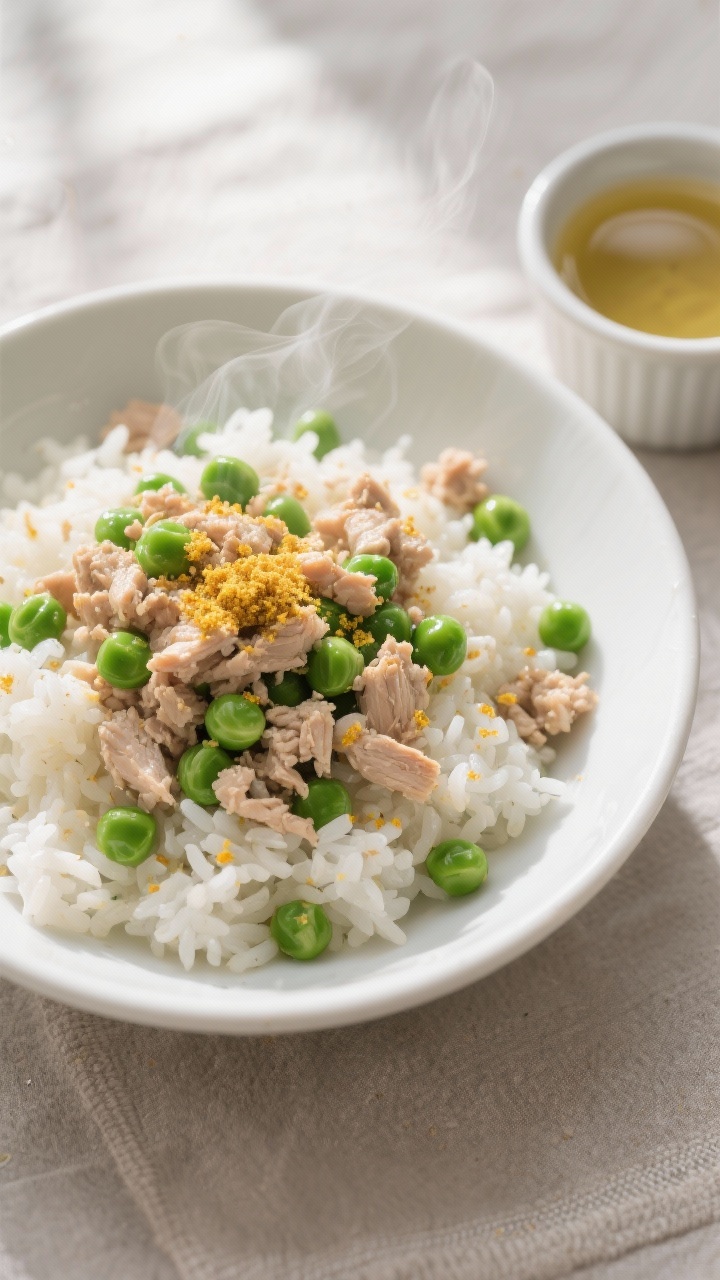
This meal is built around lean protein and simple carbs that most dogs tolerate well. Ground chicken is easy to digest and cooks quickly, while peas add fiber and a little sweetness that many dogs enjoy.
A touch of healthy fat supports skin and coat, and a calcium source helps balance the meal. The ingredients are budget-friendly, widely available, and can be adapted for many dogs’ preferences.
What You’ll Need
- 1 lb (450 g) lean ground chicken (preferably 93% lean or leaner)
- 1 cup peas (fresh or frozen; avoid seasoned or canned with added salt)
- 1 cup cooked white rice (or brown rice if your dog does well with fiber)
- 1 tbsp olive oil (or salmon oil for extra omega-3s)
- 1 large egg (optional, for extra protein and nutrients; cook fully)
- 1/2 cup low-sodium chicken broth or water (for moisture)
- 1/2 tsp ground turmeric (optional; anti-inflammatory, but keep amounts small)
- Calcium source: 1/2 tsp finely ground eggshell powder or a vet-approved calcium supplement
- Dog-safe multivitamin/mineral supplement (vet-approved; optional but recommended for long-term feeding)
Note: Do not add onions, garlic, salt, or seasonings. Keep it simple and dog-safe.
Step-by-Step Instructions
- Prepare the rice. Cook 1 cup of rice according to package directions.Let it cool and fluff with a fork. White rice is gentler on sensitive stomachs; brown rice adds more fiber.
- Brown the chicken. Heat a nonstick skillet over medium heat. Add the ground chicken and break it up with a spatula.Cook until no pink remains, about 6–8 minutes. Drain excess fat if needed.
- Add peas and moisture. Stir in the peas and 1/2 cup broth or water. Simmer for 3–4 minutes until peas are tender (if frozen, they’ll soften quickly).
- Cook the egg (optional). Push the chicken and peas to one side.Crack the egg into the pan and scramble until fully cooked, then mix it in. Fully cooked egg is gentler on digestion and safer.
- Season safely. Sprinkle in turmeric if using. Do not add salt, pepper, onion, or garlic.Stir well.
- Add healthy fats. Turn off the heat and stir in the olive or salmon oil. Adding oils off-heat helps retain nutrients.
- Combine with rice. In a large bowl, fold the chicken mixture into the cooked rice until evenly distributed. Let it cool to room temperature.
- Add calcium and supplements. Once cool, sprinkle in eggshell powder or your vet-approved calcium.If using a multivitamin, follow the label or your vet’s guidance. Mix well to distribute evenly.
- Serve the right portion. As a general starting point, feed about 2–3% of your dog’s body weight per day in food, split into two meals. Adjust for age, activity, and body condition.When in doubt, ask your vet.
How to Store
- Refrigerate: Store in an airtight container for up to 3–4 days.
- Freeze: Portion into meal-sized containers or silicone trays and freeze for up to 2 months. Label with the date.
- Thawing: Thaw overnight in the fridge. Warm gently until just lukewarm—never hot—to avoid burning your dog’s mouth.
- Moisture check: If reheated portions look dry, stir in a splash of warm water or low-sodium broth.
Why This is Good for You
Making your dog’s food at home puts control back in your hands.
You choose the ingredients, avoid fillers, and can tailor the recipe to your dog’s preferences or sensitivities. Ground chicken offers high-quality protein for muscle maintenance, while peas bring fiber and vitamins like A, K, and B vitamins. Rice provides an easy-to-digest energy source that supports sensitive stomachs.
A measured amount of healthy fats supports skin, coat, and joint health. With the addition of calcium and a balanced multivitamin, this can be part of a wholesome, long-term feeding plan.
Pitfalls to Watch Out For
- Skipping calcium: Meat-heavy meals without a calcium source can create long-term mineral imbalances. Always add eggshell powder or a vet-approved supplement.
- Seasonings and aromatics: Onion, garlic, and excess salt are unsafe for dogs.Keep it plain.
- Too much fat: Overdoing oils or using fatty chicken skin can trigger digestive upset or pancreatitis in sensitive dogs.
- Portion creep: Homemade foods can be calorie-dense. Monitor weight and body condition, and adjust portions as needed.
- Pea concerns: If your vet has advised limiting legumes, reduce peas and sub with cooked carrots, green beans, or zucchini.
- Undercooked egg: Always cook the egg fully to reduce risk and improve digestibility.
Recipe Variations
- Low-grain option: Replace rice with riced cauliflower or extra green beans if your dog does better with fewer grains.
- Different protein:</-strong> Swap chicken for ground turkey or lean beef. Keep the same cooking method and drain excess fat.
- Gentle veggie changes: Try finely diced carrots, zucchini, or pumpkin puree in place of some peas.
- Omega-boost: Use salmon oil instead of olive oil, or stir in a teaspoon of ground flaxseed for medium and large dogs.
- Bone broth base: Replace water with unsalted, onion-free bone broth for extra flavor and hydration.
- Herbal touch: A pinch of dried parsley can freshen breath; keep amounts small.
FAQ
Can I feed this every day?
Yes, as long as you include a calcium source and ideally a vet-approved multivitamin to cover micronutrients.
For long-term daily feeding, discuss your dog’s specific needs with your vet.
How much should I feed my dog?
A starting guideline is 2–3% of body weight per day, divided into two meals. For example, a 20 lb (9 kg) dog might eat 6–9 ounces (170–255 g) daily. Adjust based on activity level, age, and body condition.
Are peas safe for all dogs?
Most dogs tolerate peas well in moderate amounts.
If your vet has advised limiting legumes, reduce peas and use other vegetables like carrots or green beans. Always monitor stool quality and energy.
Can I use brown rice instead of white?
Yes. Brown rice adds fiber and nutrients, but some dogs with sensitive stomachs do better with white rice.
Pick what suits your dog’s digestion.
Do I have to add eggs?
No. Eggs are optional. They add protein and biotin, but the recipe works without them.
If using, ensure they’re fully cooked.
What if my dog has chicken allergies?
Swap the chicken for ground turkey, lean beef, or a vet-recommended alternative protein. Keep the rest of the recipe and method the same.
Can I make this in bulk?
Absolutely. Double or triple the recipe, portion into meal-sized containers, and freeze.
Thaw in the fridge and warm gently before serving.
Do I need to add salt?
No. Dogs do not need added salt in homemade meals. Avoid salted broths and seasoned ingredients.
How do I know if the portion is right?
Watch your dog’s weight, energy, and stool.
If weight creeps up, reduce portions by 10–15%. If your dog seems hungry or is losing weight, increase slightly. Regular weigh-ins help.
Can puppies eat this?
Puppies have higher calcium and energy needs.
If feeding a puppy, work with your vet to balance nutrients properly or use a growth-formulated supplement plan.
Wrapping Up
This Ground Chicken & Peas Dog Meal is simple, quick, and customizable. With balanced add-ins like calcium and a multivitamin, it can be a reliable staple or a nutritious topper to kibble. Keep portions in check, store it safely, and tweak ingredients to suit your dog.
A little planning goes a long way toward a happy, healthy bowl.
Printable Recipe Card
Want just the essential recipe details without scrolling through the article? Get our printable recipe card with just the ingredients and instructions.

I’ve spent 10+ years in dog training, digging into what makes dogs (and their humans) tick. At Smart Dog Learning, I share my no-nonsense, fun approach to training so you can enjoy life with a well-behaved, happy pup—no boring lectures, just practical results 😉