

9 Essential Commands to Teach Your Labrador Retriever First
Your Labrador is a furry genius in a wiggle suit—smart, eager, and absolutely ready to learn. The trick? Teach the right commands first so that enthusiasm turns into good manners, not chaos. We’ll keep it simple, fun, and practical so you can start today and actually enjoy training time. Ready to turn zoomies into skills?
Why Start With These 9 Commands?
Labradors love people, snacks, and doing stuff. That combo makes training easier if you pick the right building blocks. These 9 commands cover safety, manners, and daily sanity savers.
You’ll use them at the door, on walks, during meals, and when that squirrel shows up. Teach them early, keep sessions short, and reward like you mean it. And yes, your Lab will do almost anything for a treat—use that superpower wisely.
1) Name Recognition: “Buddy!” Means “Look at Me”
Before anything else, your dog needs to look at you when you say their name. It’s the “hello?” of training.
How to teach it:
- Say your dog’s name once. When they glance at you, mark with “Yes!” and treat.
- Repeat 5–10 times. Keep it upbeat.
- Add small distractions later, like moving your hand or stepping away.
Pro tip: Don’t say the name on repeat. One name, one chance to earn a reward. You’re teaching attention, not background noise.
2) Sit: The Polite Default

“Sit” solves 80% of chaos. Want calm at the door? Sit. Waiting for food? Sit. Meeting people? Sit. It’s the Swiss Army knife of dog manners.
How to teach it:
- Hold a treat above your dog’s nose and move it back slightly. As their rear hits the floor, say “Yes!” and treat.
- Add the cue “Sit” when the motion becomes predictable.
- Practice at doors, before walks, and before meals to build automatic calm.
Proofing Sit in Real Life
Practice “Sit” in different rooms, outside, and around people. Labs can act like they’ve never heard English once the mail carrier appears. Keep sessions short and fun.
3) Down: Settle That Big Labrador Energy
“Down” tells your Lab to relax. Use it at cafés, during guests’ visits, or when your pup turns into a coffee-fueled toddler.
How to teach it:
- From a sit, lure a treat to the floor between their paws, then forward. When elbows hit the ground, “Yes!” and treat.
- Fade the lure over time and add the cue “Down.”
- Reward longer holds with calm praise and the occasional jackpot treat.
Settle vs. Down
FYI: “Down” is a position. “Settle” means chill out wherever you’re lying. You can add “Settle” later by rewarding calm remains on a mat or bed.
4) Stay: The Life-Saver
Stay keeps your dog from dashing into the street, bolting out the door, or ninja-diving into the charcuterie board. Teach duration first, then distance, then distractions.
3D Method (Duration, Distance, Distraction):
- Duration: Ask for “Sit,” say “Stay,” count to two, then “Yes!” and treat. Build to 10–15 seconds.
- Distance: Take one step back, return, reward. Slowly increase steps.
- Distraction: Add simple challenges—drop a toy, clap, walk around them. Keep it fair and gradually harder.
Release word: Use “Free,” “Okay,” or “Break.” The release matters. Otherwise your dog will guess when to get up—and their guesses will be wrong.
5) Come: The Recall You Can Trust
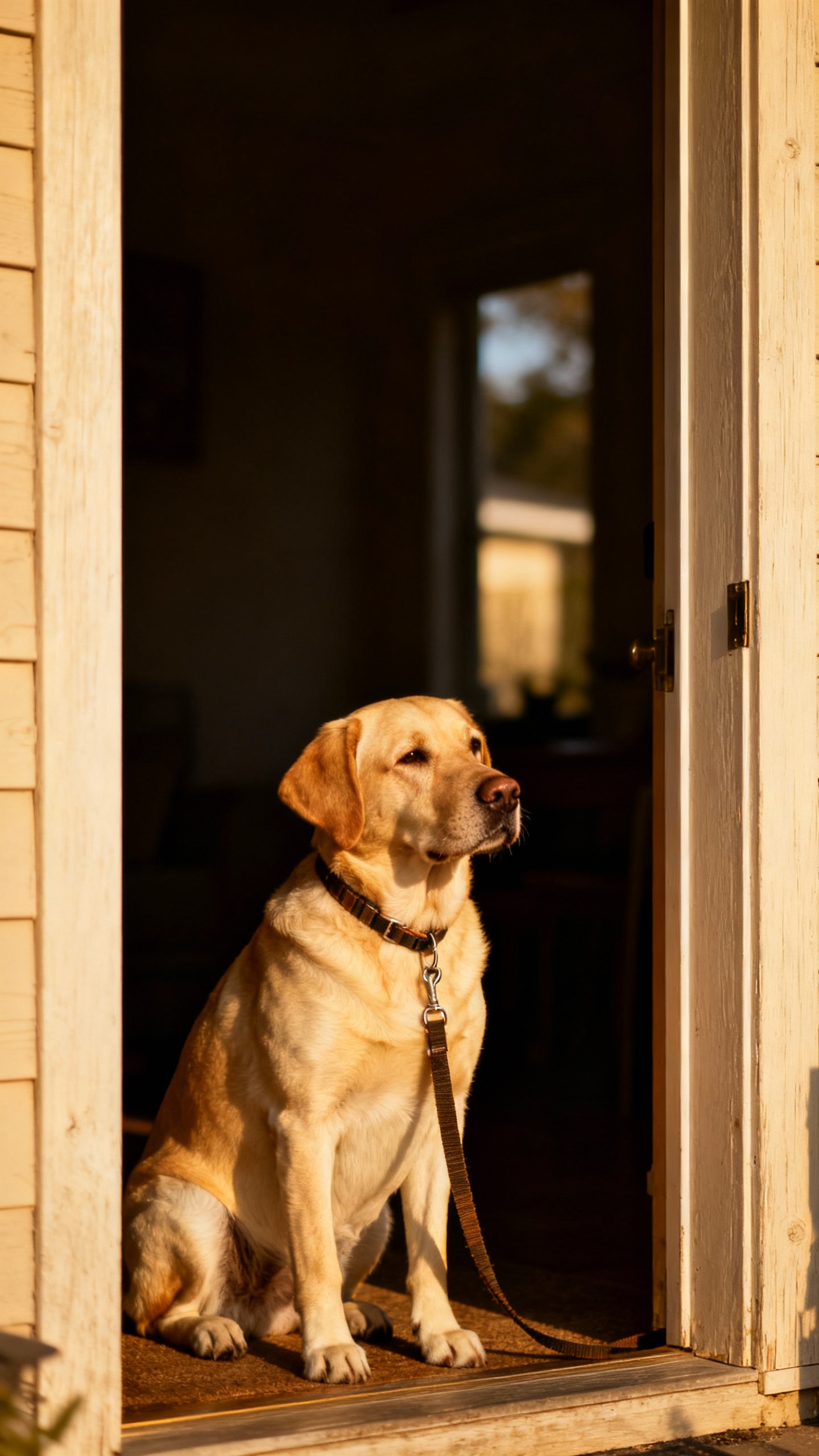
A Labrador with a rock-solid recall can safely run off-leash in safe areas. A Labrador with a weak recall… well, you’ll learn new cardio skills.
How to build it:
- Start in the house with a long line. Say “Buddy, come!” in a happy tone, then run backward. Reward like you just won the lottery.
- Never call to end fun. Call, reward, release to play again sometimes.
- Use high-value treats: chicken, cheese, or whatever your Lab would write sonnets for.
Emergency Recall
Pick a special word like “Here!” or “Now!” and only use it for real emergencies or surprise jackpots. Pay with the best reward you own—think roast chicken tier.
6) Leave It: Because Labs Eat Everything
Socks. Rocks. Mystery street nuggets. “Leave it” saves stomachs and vet bills.
Two-step approach:
- Trade-up drill: Hold a treat in a closed fist. When your dog backs off, say “Yes!” and reward from your other hand.
- Ground rule: Place a boring treat on the floor. Cover with your foot. When your dog disengages, reward with a better treat from your pocket. Add the cue “Leave it.”
Golden rule: Your dog never gets the thing you asked them to leave. Reward with something else.
7) Drop It: The Sock Surrender
Different from “Leave it.” “Drop it” means release what’s already in their mouth—like your favorite slipper.
How to teach it:
- Offer a toy. Once they hold it, present a super-treat at their nose. When they drop, mark and reward.
- Give the toy back sometimes so they don’t play keep-away. Trading builds trust.
- Add the cue “Drop it” when they release consistently.
Pro-Level Tip
Practice with safe items first. Don’t start with contraband like socks or shoes. Build the reflex, then apply in real life.
8) Heel (or Let’s Go): Chill Walks, Zero Shoulder Dislocations

Labs pull because the world smells like joy. Teach “Heel” for focus, or “Let’s go” for loose-leash walking.
Loose-leash basics:
- Reward your dog for being at your side with a slack leash. Move fast and change directions often.
- If they pull, stop. Become a tree. When the leash loosens, move again and reward.
- Use a front-clip harness for extra control. IMO, it’s a game-changer for young Labs.
“Heel” vs. “Let’s Go”
Heel = precise position by your leg, great for crowded areas. Let’s go = polite walking with some freedom. Teach both for flexibility.
9) Place: Go to Your Spot and Relax
“Place” tells your Lab to hop onto a mat or bed and stay there. It’s magical during mealtimes or when guests arrive.
How to teach it:
- Toss a treat on the mat. When your dog steps on it, mark and treat.
- Add “Place,” then ask for a “Down” on the mat. Reward calm.
- Increase time and start working with door knocks, doorbells, or people entering.
Bonus: Use a distinct mat so your dog knows exactly where to go. Portable “Place” helps in new environments too.
Training Tips That Make Everything Faster
Keep Sessions Short
Aim for 3–5 minutes, 2–3 times a day. Stop while your dog still wants more. Think sitcom length, not feature film.
Use the Right Rewards
Rotate treats to keep interest high. Mix food with play and praise. Some Labs work best for a quick tug game—try it.
Consistency Wins
Use the same cues, same release word, and a simple marker like “Yes!” You’ll prevent confusion and speed up learning.
Manage the Environment
Set up success. Use baby gates, leashes, and closed doors so your dog can’t rehearse chaos. Management isn’t cheating—it’s smart.
Common Mistakes (And Easy Fixes)
- Too many repetitions: If your Lab nails it twice, move on or make it harder. Don’t bore them.
- Repeating cues: Say it once. If they don’t respond, help them succeed, then try again.
- Training only at home: Practice in new places. Dogs don’t generalize well—help them connect the dots.
- Underpaying: Big asks need big rewards. Recall for kibble? Hard pass, IMO.
FAQ
How long will it take my Labrador to learn these commands?
Most Labs pick up basics within a week or two with daily practice. Reliability takes longer, especially with distractions. Work step-by-step and celebrate small wins.
What age should I start training?
Start as soon as your puppy comes home—often 8 weeks. Keep it short and upbeat. Older Labs learn too; they just may have stronger habits to reshape.
What if my Lab only listens when I have treats?
You need to fade the lure and switch to variable rewards. Reward randomly once your dog knows the cue, and add life rewards—like going outside, greeting people, or chasing a toy. Behavior that pays unpredictably sticks better.
Can I train these commands without a trainer?
Yes, these basics are totally DIY. That said, a positive-reinforcement trainer can speed things up and fix sticky problems fast. Group classes also tire your dog mentally—big perk.
My Lab gets too excited around guests. Which commands help most?
Focus on “Sit,” “Place,” and “Stay.” Practice with staged distractions first. Have guests toss treats onto the mat when your dog stays put—good choices should pay.
Do I need a clicker?
You can use a clicker or a marker word like “Yes!” Both work. Clickers help with timing, but your voice travels everywhere—handy in real life.
Wrapping It Up
Teach these nine commands and you’ll turn that lovable Labrador chaos into everyday magic. Keep sessions short, rewards awesome, and your tone upbeat. You’ll end up with a dog who listens anywhere, even when the squirrels unionize. And honestly, that’s the dream, right?

I’ve spent 10+ years in dog training, digging into what makes dogs (and their humans) tick. At Smart Dog Learning, I share my no-nonsense, fun approach to training so you can enjoy life with a well-behaved, happy pup—no boring lectures, just practical results 😉