

8 Socialization Tips for Raising a Well-Behaved French Bulldog
Frenchies charm the socks off strangers, but even the cutest gremlin needs manners. Socialization turns your snorty sidekick into a confident, friendly dog who can handle the world without meltdowns. You don’t need a PhD in dog psychology—just consistency, patience, and some very good snacks. Ready to raise a well-behaved French Bulldog who doesn’t bulldoze every situation?
Start Early, Go Slow
Puppies soak up experiences like fluffy sponges. Introduce your Frenchie to sights, sounds, people, and surfaces early—ideally during the 8–16 week window. But don’t rush. Flooding them with too much at once can backfire.
Keep sessions short and upbeat. One or two new things per outing works great. If your pup looks unsure—tail down, ears pinned, whale eyes—take a step back. You win socialization by building confidence, not by muscling through fear.
Safe Exposure Ideas
- Walk past a school during dismissal (from a distance).
- Visit a pet-friendly store for 5–10 minutes.
- Let them sniff skateboards, bikes, and umbrellas.
- Practice stepping on grass, gravel, sand, and mats.
Make Every Introduction Positive
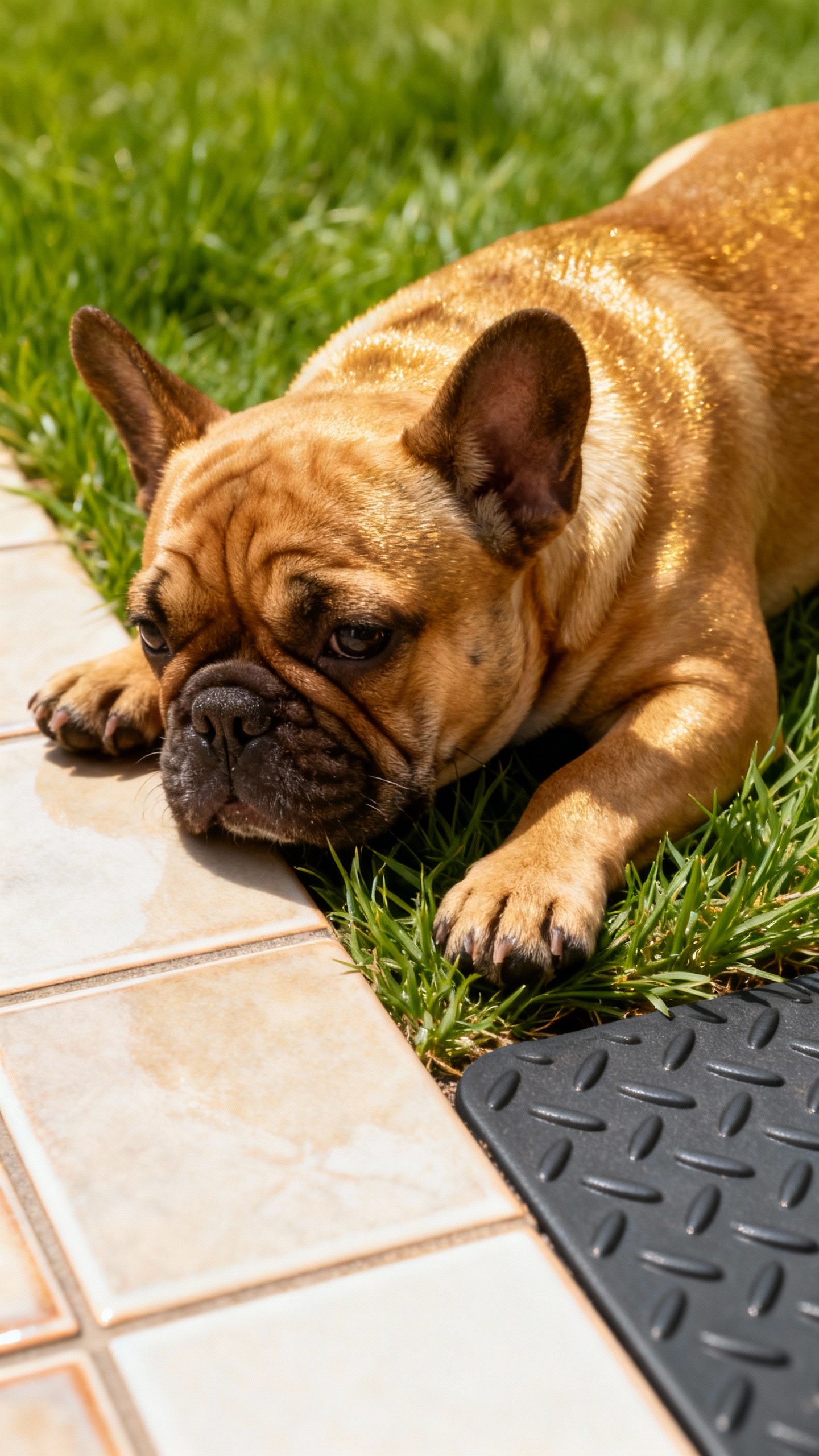
Your Frenchie will remember how they felt during new encounters, not just what happened. Pair every new person, dog, or sound with high-value treats and happy praise. Think chicken pieces, cheese, or their absolute favorite bites.
If your dog leans away or freezes, don’t force contact. Create space, toss treats closer to the “scary” thing, and celebrate tiny curiosity. That hesitant sniff? Treat and party.
People Etiquette for Frenchies (and Humans)
- Ask for consent: Teach “sit” before greetings. No sit, no hello. Keeps jumping in check.
- Coach strangers: “Please let him sniff first, then pet under the chin.”
- Skip the toddler tackle: Sit your dog and let calm kids pet gently—no hugging.
Dog-to-Dog Interactions: Quality Over Quantity
Not every dog wants to be your Frenchie’s bestie, and that’s OK. Aim for calm, well-matched playmates instead of chaotic dog parks. Short, structured playdates beat 60 minutes of mayhem.
Watch for polite play: loose wiggly bodies, play bows, role reversals, and breaks. Step in if you see stiff posture, hard staring, or pinning. Frenchies can play rough when excited—use 10–15 minute sessions and end on a good note.
What About Dog Parks?
IMO, dog parks can work for bombproof, social dogs with solid recall. Many Frenchies prefer smaller circles. If you go, choose off-peak hours, scout dogs before entering, and keep treats in your pocket. If vibes go weird, leave. No medal for sticking it out.
Desensitize to Real-World Noise and Chaos

Vacuum cleaners, delivery trucks, sirens—Frenchies can handle them with smart exposure. Start at low intensity and pair with treats. You can use YouTube sound playlists at low volume while you play or feed.
Build difficulty gradually:
- Play a low-volume noise while your dog chews a stuffed Kong.
- Raise the volume slightly if they stay relaxed.
- Practice moving the vacuum around without it on, then turn it on briefly.
If your dog startles, lower intensity and toss treats. Confidence grows in inches, not miles.
Crate, Carrier, and Handling Skills
Vet visits and travel get way easier when your Frenchie accepts handling. Practice at home for a minute or two daily. Short, sweet, and paid in snacks.
- Paws and nails: Touch each paw, treat. Hold a nail clipper nearby, treat. Work up to one nail at a time.
- Ears and face: Gentle ear lifts and wrinkle wipes with treats. Frenchie faces need routine maintenance.
- Crate vibes: Feed meals in the crate, toss treats inside, door open at first. Make it a safe den, not doggy jail.
Handling Game
Ask for “sit,” touch collar, treat. Lift lip, treat. Peek in ears, treat. Build to a mock vet exam. When the real thing happens, your dog will shrug like, “Been there.”
Leash Manners in Busy Places
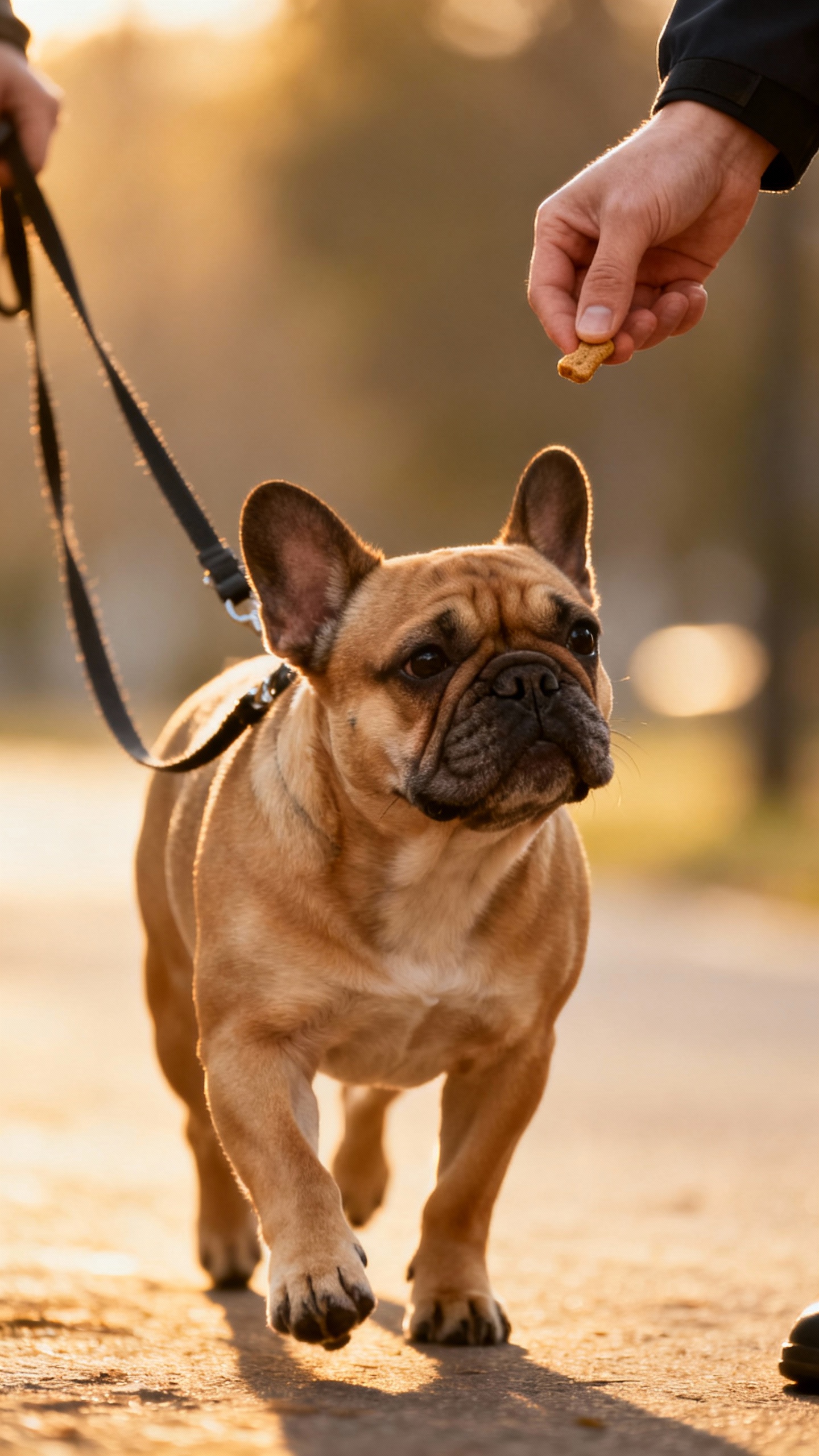
A polite leash walk doubles as socialization. Start on quiet streets, then level up to busier sidewalks. Reward check-ins and calm walking with frequent treats.
Teach focus cues:
- “Look at me” for eye contact when distractions appear.
- “Let’s go” to move past chaos without drama.
- “Sit” at curbs, doors, and crosswalks for impulse control.
FYI: Flat harnesses work great for Frenchies’ necks and breathing. Skip prongs and chokes—comfort equals confidence.
Set Boundaries at Home (Yes, That’s Socialization Too)
Your Frenchie learns how the world works from your living room. Teach patience, calm greetings, and “place” on a mat for downtime. You’ll avoid pushy habits that become public embarrassments later.
Home practice ideas:
- Doorbell = go to mat, get treats, then greet calmly.
- Guests ignore the dog until four paws stay on the floor.
- Structured play: start, stop, and trade toys on cue.
Does it feel strict? Maybe. But you’re teaching your dog how to handle excitement without short-circuiting. Everyone wins.
Enroll in a Puppy or Manners Class
A good class gives you coaching, controlled exposure, and troubleshooting. Look for trainers who use reward-based methods and cap class sizes. Ask about supervised play and off-limit tools (IMO, avoid anyone who suggests e-collars for puppies).
Bring high-value treats, a comfy harness, and your sense of humor. You’ll learn faster with a pro watching your timing and technique.
Troubleshooting Common Frenchie “Moments”
French Bulldogs love people, but they can get pushy or overstimulated. Expect hiccups. Plan for them.
- Jumping on guests: Reinforce sit for greetings. If they jump, turn away, then reward sit. Consistency beats lectures.
- Barking at noises: Thank-you cue: “Thanks, I’ve got it,” then treat for silence. Teach an alternative behavior like “go to mat.”
- Over-excitement with dogs: Breaks every few minutes. Practice “look” and “come” between play bursts.
- Stubborn streaks: Increase treat value, reduce distractions, and split tasks into smaller steps. Stubborn usually means “I’m confused” or “This deal isn’t worth it.”
FAQ
When should I start socializing my French Bulldog?
Start as soon as your vet gives the green light to leave the house, usually after first vaccinations. You can also do safe socialization at home before that—invite vaccinated friends over, play sound desensitization, and handle paws, ears, and face. The earlier you build positive associations, the easier everything becomes.
How much socialization does my Frenchie need?
Short daily exposures work best—5 to 15 minutes sprinkled through the day. Aim for variety over intensity: new sights, calm people, different surfaces, a few dog hellos. Track what you’ve covered so you don’t overdo one category and miss others.
What if my Frenchie seems scared of people or dogs?
Create distance and pair the trigger with treats. Let your dog watch from afar until their body relaxes. Gradually move closer across sessions. For persistent fear or reactivity, hire a reward-based trainer or behavior consultant—early help saves time and stress.
Can adult Frenchies still be socialized?
Absolutely. Adults learn just fine with patience. You’ll move slower, use higher-value rewards, and prioritize calm, predictable setups. Think “introvert-friendly” exposures: one dog at a time, quiet parks, and structured classes.
Are dog parks necessary for socialization?
Nope. They can help some dogs, but they’re not essential. Controlled playdates, structured classes, and neighborhood walks provide plenty of social mileage without the chaos. If your Frenchie loves parks, great—choose the right times and monitor like a hawk.
What treats should I use for best results?
Use soft, pea-sized, super-tasty bites that your dog doesn’t get elsewhere. Think chicken, turkey, cheese, or store-bought training treats. Rotate flavors to keep motivation high. If your dog ignores treats, the situation may feel too hard—create distance and try again.
Conclusion
Socialization isn’t a one-week project—it’s a lifestyle. Keep sessions short, fun, and fair, and your Frenchie will meet the world with that signature “I’ve got this” swagger. Reward the behavior you want, manage the rest, and laugh off the blooper moments. FYI: a well-socialized Frenchie isn’t perfect—they’re just prepared, and that’s the real win.

I’ve spent 10+ years in dog training, digging into what makes dogs (and their humans) tick. At Smart Dog Learning, I share my no-nonsense, fun approach to training so you can enjoy life with a well-behaved, happy pup—no boring lectures, just practical results 😉