
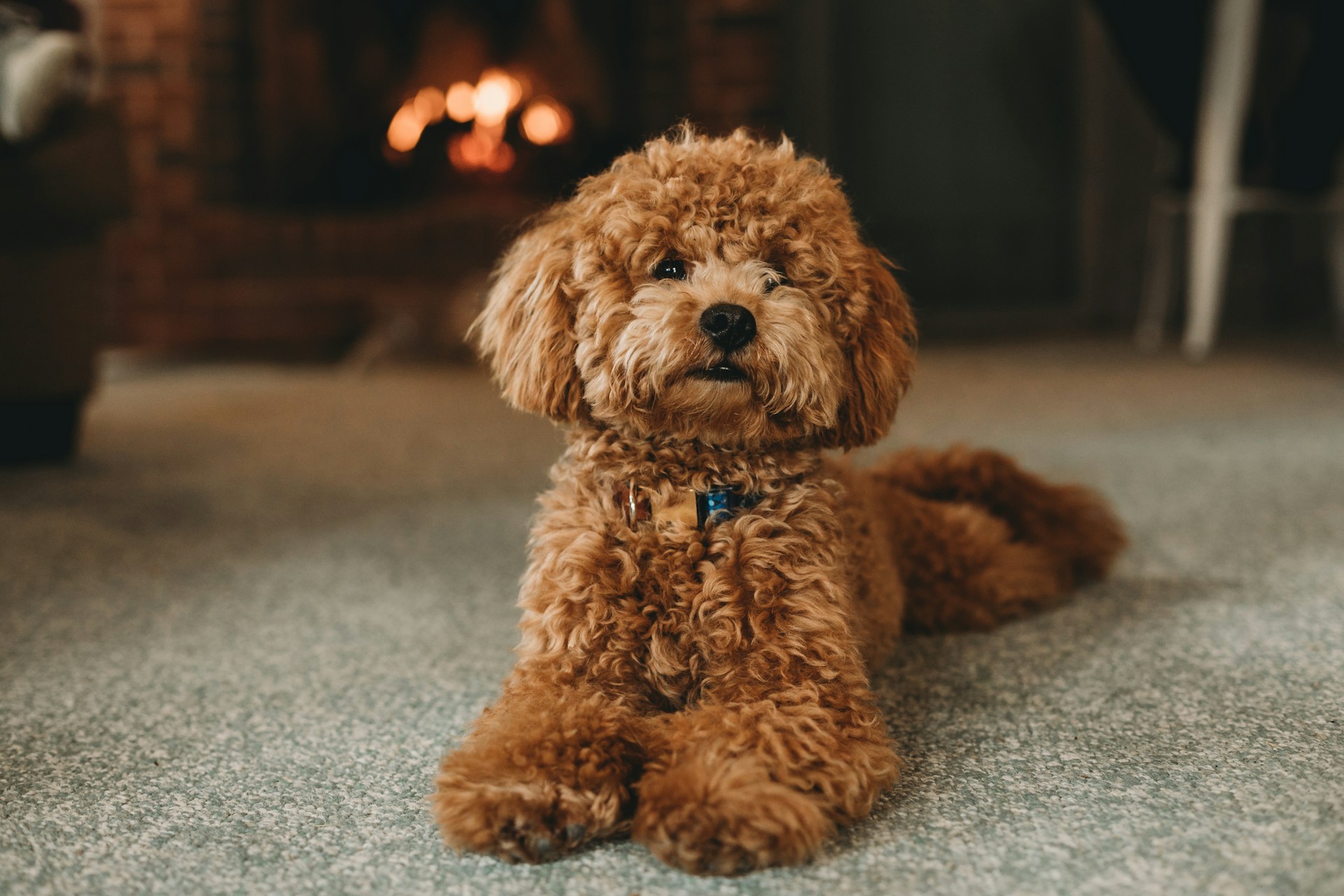
8 Poodle Puppy Training Tips For Smart, Quick Learners
Poodles come wired for learning. Your puppy watches, predicts, and figures you out faster than your last smartphone update. That’s awesome—until they start opening cabinets, teaching themselves parkour off the sofa, and “redecorating” your shoes.
Good news: with the right approach, you can channel that brainpower into manners and magic tricks. Let’s make training fun, fast, and ridiculously effective.
Start with a 60-Second Brain Warm-Up
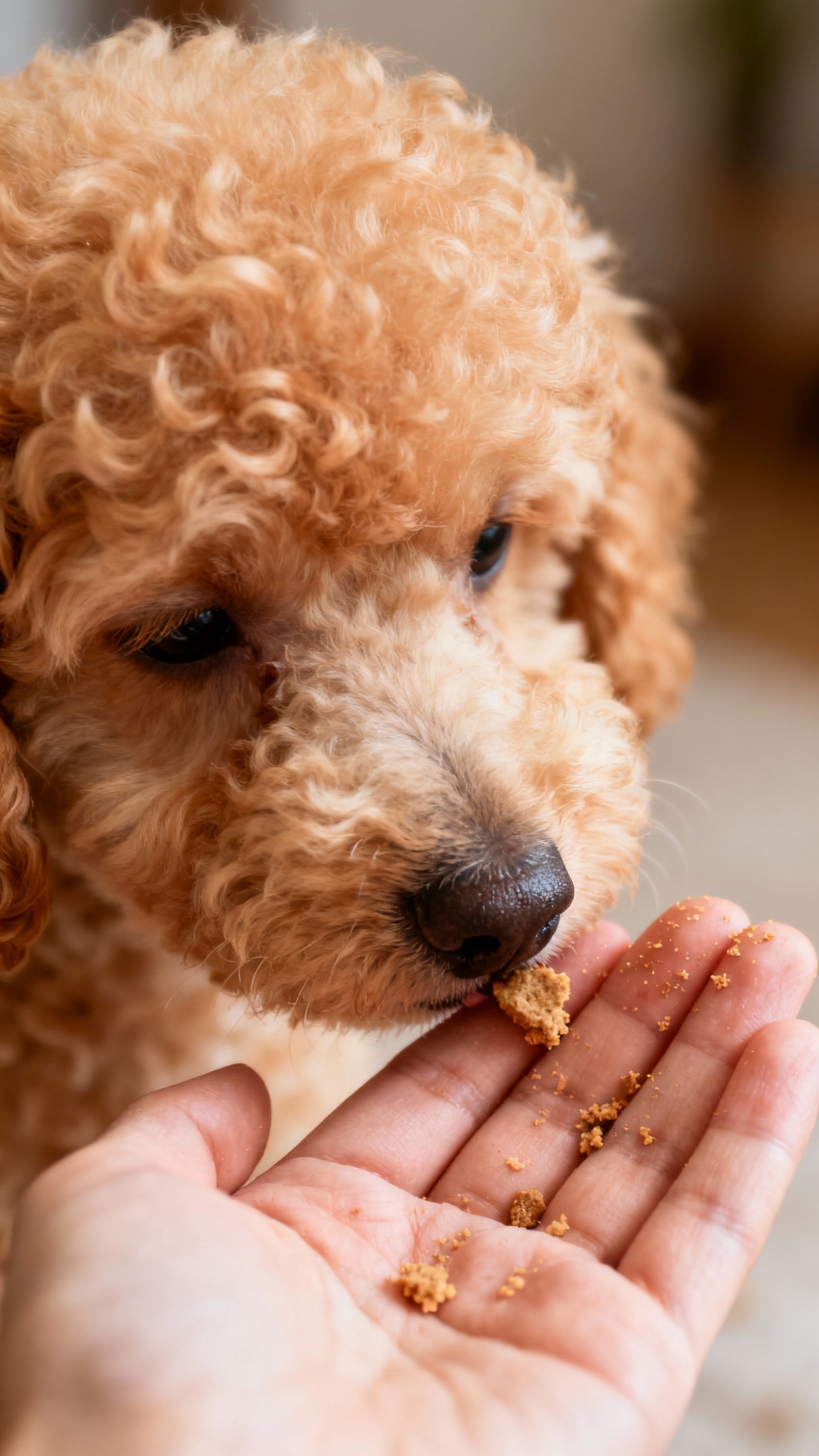
Short sessions beat marathon drills every time. You’ll keep focus high and frustration low.
Think tiny lessons sprinkled through the day, not one giant bootcamp.
- Do 3–5 mini sessions daily, just 1–3 minutes each.
- One skill per session: sit, down, name recognition, or hand-target.
- End while your pup still wants more so training feels like a game.
Power-Up Drills
- Name game: Say the name → mark “Yes!” → treat. Easy, fast, essential.
- Hand-target: Present palm → nose boop → “Yes!” → treat. This becomes your steering wheel in public.
- Fast sits: Lure into sit → “Yes!” → treat at mouth level.
Reward speed, not just position.
Use a Training Currency Your Poodle Actually Cares About
Not all rewards are equal. Poodles often prefer variety over quantity because, hello, brainy. Mix it up to keep them guessing.
🍲 50 Printable Dog Food Recipes Your Pup Will Love
Skip the fillers and preservatives. Make healthy, homemade meals your dog will actually eat — using everyday ingredients you already trust. Vet-friendly, budget-friendly, and super easy to follow. 🐾
Perfect for picky eaters, senior dogs, and pups with sensitive stomachs. Make mealtime simple and nutritious again.
Get the Recipes Now 🐶- Treat rotation: soft, pea-sized bits of chicken, cheese, or high-quality training treats.
- Toy rewards: a quick tug or mini fetch for high-energy pups.
- Life rewards: door opens, couch cuddles, permission to sniff that glorious bush.
Mark the Moment
Use a crisp marker word like “Yes!” or a clicker.
It tells your pup exactly when they nailed it. Timing beats volume, FYI.
Teach Impulse Control Before You Need It
Smart puppies invent chaos if you don’t give them structure. Train “please” behaviors that earn what they want.
- Default sit for anything they want: door opens, leash on, food down, greetings.
Reward sits automatically.
- Leave it: Treat in closed fist → nose tries → wait → they back off → “Yes!” → treat from the other hand.
- Wait at doors and curbs: build from one second to five, then release with a cheerful “Okay!”
Greeter Protocol (Save Your Visitors)
Leash on. Ask for sit. Visitor tosses treats to the floor for four paws on the ground.
If pup jumps, visitor turns into a statue. Poodle brains connect “butts down = party,” and you win.
Socialization: Curate Their World Like a Playlist
Early exposure shapes a confident, unflappable adult dog. But don’t flood them with chaos.
Curate it.
- Goal: 2–3 positive “firsts” per day until 14–16 weeks.
- Mix the inputs: different surfaces, hats, wheelchairs, umbrellas, friendly dogs, city sounds.
- Keep distance so your pup stays under threshold—no trembling, no tail tucking.
Make It Positive
Pair every novelty with quick treats and happy praise. If your pup looks unsure, you went too fast. Dial it back.
Confidence grows from choice, not pressure. IMO, this matters more than fancy tricks.
Harness Their Inner Nerd with Brain Games
Bored poodles invent hobbies, like counter-surfing and sock relocation. Give them a job.
- Food puzzles: snuffle mats, topple feeders, frozen Kongs.
Breakfast becomes enrichment.
- Shaping sessions: reward tiny steps toward a trick—like going to a mat or putting toys in a bin.
- Nose work: hide treats in boxes and let them hunt. Start easy, add difficulty slowly.
Teach “Go to Mat”
Lure to a mat → treat for any contact → build duration → add a release word. This skill turns chaos into calm during meals, Zoom calls, or doorbell madness.
It’s basically a life hack.
Leash Skills: Smooth Operator, Not Sled Dog
Leash manners save your shoulders and your dignity. Start indoors where distractions can’t mess you up.
- Reinforce position: Treat for walking beside your leg, one step at a time. Don’t move forward if they pull.
- Be a tree: If the leash goes tight, stop.
Wait. When they return or slackens, mark and go.
- Change direction frequently: Keep them focused; pulling loses access to the fun stuff.
Gear Check
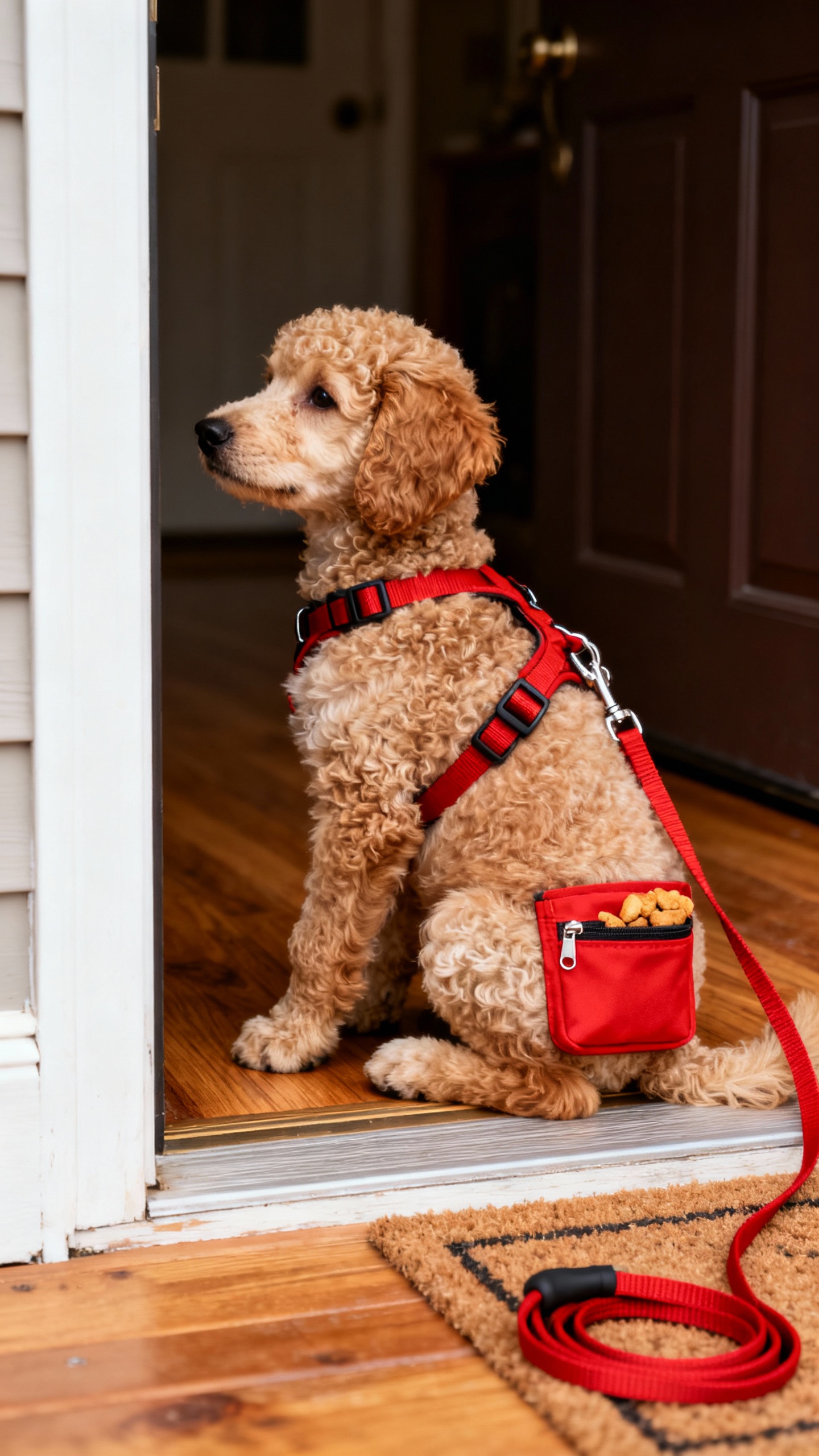
Use a comfortable harness and a 4–6 ft leash. Pocket treats.
Poop bags. Low expectations at first, high paychecks for good choices. Simple.
Crate and Alone-Time Training (Goodbye Separation Drama)
You want a dog who chills solo.
Start now, before clingy habits form.
- Create a cozy cave: soft bedding, safe chew, cover part of the crate.
- Door games: Treat for entering, relaxing, and staying while the door opens and closes.
- Alone minutes: Leave for 1–3 minutes, return casually. Build duration slowly—no big fanfare.
Night Routine
Last potty break, quiet chew in the crate, lights low. Keep nighttime trips boring.
You’re not running a midnight rave.
Proof It or Lose It
Your poodle sits like a champ in the kitchen—and forgets it at the park? Normal. You need to “proof” behaviors in new contexts.
- 3 D’s: distance, duration, distraction.
Change only one at a time.
- New rooms, new rules: re-teach skills in different places—yard, driveway, sidewalk, pet-friendly store.
- Randomize rewards: once solid, pay with variable reinforcement to keep effort high.
Real-Life Drills
– Sit while you place the food bowl. – Down-stay during TV commercials. – Hand-target at crosswalks. – Leave it with dropped food (start with kibble, not steak—let’s be fair).
FAQ
How many training sessions should I do per day?
Aim for 3–5 micro-sessions of 1–3 minutes each. Add training into daily life: before meals, at doorways, during potty breaks. Short, sweet, and consistent beats long and boring.
What if my poodle puppy gets nippy during training?
End the game calmly, redirect to a chew, and resume later.
Reinforce calm sits and hand-targets instead of grabbing clothes. Nipping usually means over-arousal or fatigue—so take a break. FYI, overtired puppies act like tiny pirates.
Do I need a clicker, or is a marker word enough?
A marker word like “Yes!” works great and travels everywhere.
Clickers add precision if you enjoy the tool. Use what you’ll actually use consistently—consistency wins, gadgets don’t.
When can I start leash training?
Right away—indoors first. Reward position, build focus, then venture outside post-vaccination guidance from your vet.
Waiting until “they’re older” just rehearses chaos.
How do I stop jumping on guests?
Pre-plan it. Leash your pup, ask for a sit, and have guests toss treats to the floor for four paws down. If jumping starts, guest freezes.
Puppy learns that calm earns attention and treats; trampoline moves don’t.
What treats are best for training?
Small, soft, and stinky. Think pea-sized chicken, cheese, or high-quality training treats. For big wins (first down-stay at the park), upgrade to jackpot rewards.
IMO, variety keeps smart pups engaged.
Conclusion
Your poodle puppy learns fast, so teach the good stuff first and often. Keep sessions short, rewards great, and expectations clear. Build impulse control, social confidence, and real-life skills you’ll use every day.
With brains like these, you’re not just training a dog—you’re raising a witty, well-mannered sidekick who makes you look like a genius, too.
I’ve spent 10+ years in dog training, digging into what makes dogs (and their humans) tick. At Smart Dog Learning, I share my no-nonsense, fun approach to training so you can enjoy life with a well-behaved, happy pup—no boring lectures, just practical results 😉