7 Sofa Cleaning Hacks To Refresh Your Furniture
Your sofa sees everything—movie marathons, snack disasters, and that one red wine incident you swore would never happen again. When it starts looking tired (or smelling suspicious), you don’t need a miracle. You need smart, simple hacks that work fast.
Let’s get that couch back to “wow” with tricks you can do today without turning your living room into a chemistry lab.
Start with the Basics: Vacuum Like You Mean It
You can’t fix what you can’t see. Crumbs, dust, pet hair—all of it burrows into the fabric and makes stains look worse. Grab a vacuum with an upholstery attachment and go slow.
- Use the crevice tool to attack seams and under cushions.
That’s where the snack graveyard lives.
- Vacuum in two directions to lift debris and fluff the fibers.
- Shake or beat cushions outside for a quick refresh.
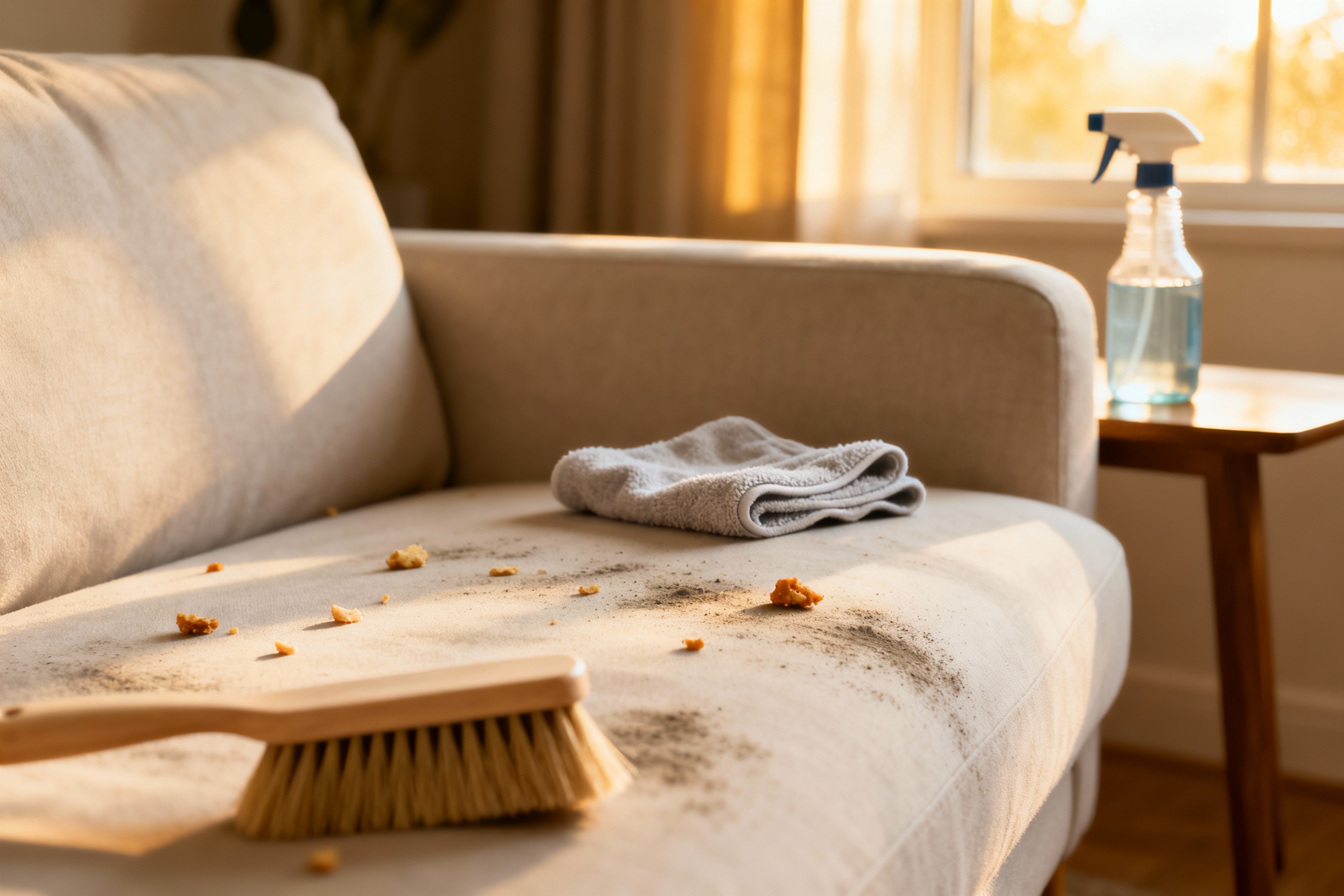
Pro move: Fabric brush + lint roller
Hit the surface with a fabric brush to loosen fuzz and dirt, then follow with a lint roller. It grabs the tiny stuff your vacuum misses. Satisfying, right?
Decode Your Sofa’s Tag Before You Clean
That tiny tag with mysterious letters?
It’s your cheat sheet. Follow it or risk turning your sofa into modern art (the bad kind).
- W = Water-based cleaners are safe
- S = Solvent-based cleaners only (no water)
- WS = Water or solvent, lucky you
- X = Vacuum only, call a pro for stains
If your tag fell off during a dramatic pillow fight, test any cleaner on a hidden area. FYI, dye transfer and shrinkage happen fast.
Fight Odors with Baking Soda Magic
Baking soda doesn’t care about your regrets.
It neutralizes funky smells without masking them.
- Sprinkle a generous layer over the sofa, especially the seat and arms.
- Let it sit 30–60 minutes (longer for pet smells).
- Vacuum thoroughly with the brush attachment.
Boost it with essential oils (carefully)
Mix 1 cup baking soda with 5–8 drops of essential oil in a jar, shake, and sprinkle. Test first—some oils can stain. IMO, lavender and lemon smell like “clean” without screaming “I tried too hard.”
Blot Stains Fast (Stop Rubbing!)
Spills happen.
Panic doesn’t help, but quick blotting does. Rubbing pushes the stain deeper and spreads it around like gossip.
- For fresh spills: Blot with a clean, white cloth until the liquid stops transferring.
- For food stains: Scrape off any solids with a dull knife.
DIY stain solutions by fabric code
- W or WS fabrics: Mix 1 cup warm water + a few drops of dish soap. Dab, blot, repeat.
Rinse with a damp cloth and blot dry.
- S fabrics: Use a small amount of dry-cleaning solvent or rubbing alcohol on a cloth. Dab gently and let it air dry.
- Grease stains: Sprinkle cornstarch, let sit 15 minutes, vacuum, then treat with your fabric-appropriate cleaner.
Steam for the Deep Clean (When It’s Safe)
Got a W or WS fabric? You can use a handheld steamer or a carpet cleaner with an upholstery tool.
Steam loosens grime and revives saggy fibers.
- Vacuum first to remove loose dirt.
- Pre-treat stains so steam can finish the job.
- Steam in light passes and avoid soaking the fabric.
- Let it dry completely with fans or open windows to prevent musty smells.
Skip steam on these
If your sofa is labeled S, X, leather, or delicate velvet, keep the steamer in the closet. Heat plus the wrong fabric equals regret.
Leather and Faux Leather: Clean, Condition, Glow
Leather looks better with age—if you treat it right. You can’t use the same methods as fabric, unless you enjoy cracks and sadness.
- Dust and vacuum with a soft brush first.
- Wipe with a damp microfiber cloth and a tiny drop of mild soap if needed.
- Condition with a leather conditioner every 3–6 months to prevent drying.
Quick fixes for scuffs
Rub scuffs gently with a soft cloth and a drop of olive oil.
Buff it out. Don’t bathe the sofa in it—just a tiny bit. FYI, always spot-test first.
Neutralize Pet Problems (Hair, Dander, and “Why Would You Do That?”)
Pets bring joy and fur.
So much fur. Tackle it systematically.
- Hair removal: Use a slightly damp rubber glove and swipe across cushions. Hair clumps up like magic.
- Odor control: Baking soda routine weekly, plus washable throw blankets as your first line of defense.
- Accidents: Blot urine immediately, then treat with an enzyme cleaner safe for your fabric.
Let it sit as directed.
Protect against repeat offenses
Consider a waterproof liner under removable cushion covers. It blocks liquid from soaking into foam, which is where odors love to live. IMO, this one change saves the most headaches.
Brighten and De-Pill: The Fabric Glow-Up
Pilling makes a nice sofa look tired.
You can fix it in minutes.
- Use a fabric shaver or a sweater stone to remove pills gently.
- Brush the nap with an upholstery brush to restore texture.
- Mist with fabric refresher (lightly!) and let it air out for a fresher feel.
Sunlight and airflow help
On a dry day, open windows and let the sofa breathe. Indirect sunlight and fresh air knock out lingering odors and moisture. Avoid direct blazing sun—it can fade fabric and dry out leather.
Protect and Maintain So You Clean Less
Cleaning takes time.
Protecting takes less.
- Apply a fabric protector if your fabric allows it. It buys you precious blotting time during spills.
- Rotate cushions every few weeks to prevent sag spots.
- Use washable throws where you sit the most. They’re fashion and function.
- Set a mini schedule: Vacuum weekly, spot clean as needed, deep clean every 3–6 months.
FAQ
How do I get rid of a musty smell in my sofa?
Vacuum thoroughly, sprinkle baking soda, and let it sit for at least an hour before vacuuming again.
If the tag says W or WS, lightly mist a 50/50 mix of water and white vinegar, then air dry with fans. Repeat if needed. If the foam inside smells musty, remove covers (if possible) and let the cushions air out in indirect sun.
Can I use vinegar directly on my sofa?
Use diluted vinegar only on W or WS fabrics.
Mix equal parts water and white vinegar, spot-test, then mist lightly and blot. Never soak the fabric. Skip vinegar on S or X fabrics and on leather.
What’s the best way to clean microfiber?
Check the tag: many microfiber sofas are S or WS.
For WS, use a tiny bit of dish soap in warm water, dab, then brush the fibers with a soft brush when dry to restore the nap. For S, use rubbing alcohol in a spray bottle, dab with a white cloth, and brush after it dries.
How do I dry my sofa faster after cleaning?
Aim a fan at the sofa, open windows, and remove cushions to stand them on edge. Keep the room warm and dry.
Avoid direct heat tools like hair dryers because they can warp or shrink fabric.
Are store-bought fabric refreshers safe?
Usually, but always test on an inconspicuous spot first. Some can leave rings or change texture. If you’re sensitive to fragrances, make a DIY refresher with distilled water, a splash of vodka, and a drop of essential oil—then test it, too.
When should I call a professional cleaner?
If your tag says X, if stains cover large areas, or if you’re dealing with smoke or deep pet odors, bring in a pro.
They have the tools to clean deeply without wrecking the fabric. Also call them for expensive or delicate pieces you don’t want to risk. Low drama, high reward.
Wrapping It Up
Your sofa doesn’t need a full makeover—just consistent, smart care.
Vacuum regularly, treat spills fast, and use the right cleaner for your fabric. Add a few protectors and you’ll stretch that fresh, comfy vibe for years. And if all else fails?
Throw on a stylish blanket and pretend it’s intentional. FYI, that trick works shockingly well.

I’ve spent 10+ years in dog training, digging into what makes dogs (and their humans) tick. At Smart Dog Learning, I share my no-nonsense, fun approach to training so you can enjoy life with a well-behaved, happy pup—no boring lectures, just practical results 😉