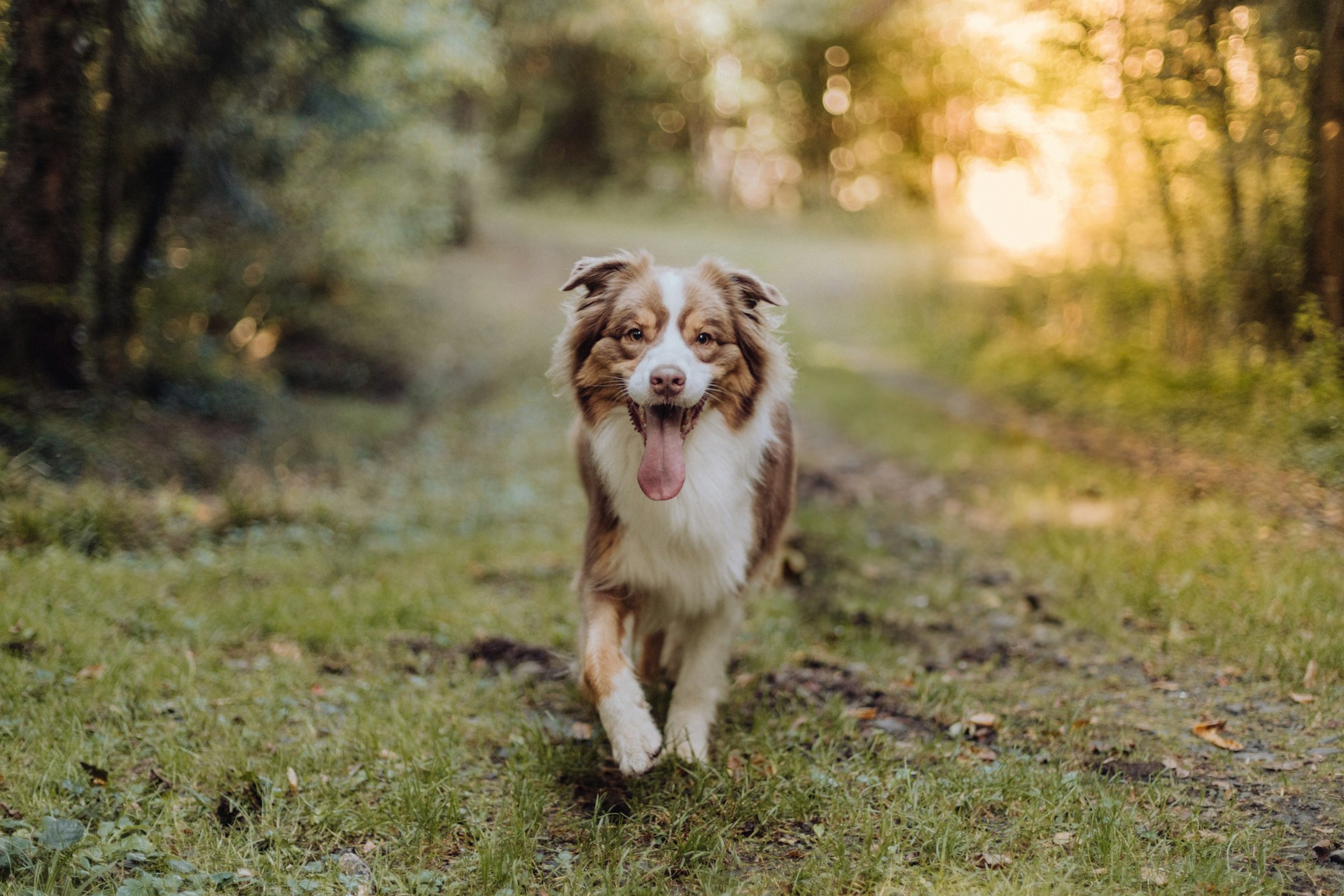
7 Australian Shepherd Puppy Training Tips For Active Families
Australian Shepherd puppies don’t stroll into your life—they sprint, leap, and occasionally parkour off your couch. They’re brilliant, stubborn, and bursting with energy in a very “did someone feed this dog espresso?” way. If your family loves hiking, playing sports, and actually using that backyard, an Aussie pup can be your ultimate sidekick.
Just bring patience, structure, and a sense of humor. Let’s make this chaos adorable and well-behaved.
Know Your Aussie: Brain + Energy = Training Gold
Australian Shepherds don’t just learn commands—they analyze them, debate them, and then try to optimize the process. They crave mental and physical work, or they’ll invent hobbies like excavating your lawn or herding your children into corners. That’s not “bad behavior,” FYI.
That’s a bored genius. So what’s the formula? Short, daily training sessions + structured exercise + puzzles = a pup who can chill after you tire out their brain and body.
How much exercise does a puppy need?
– 8–12 weeks: Short play bursts, 5–10 minutes of training, and gentle socialization. – 3–6 months: Several 10–15 minute training blocks, controlled fetch, and beginner enrichment games. – 6–12 months: Increase intensity but avoid repetitive high-impact work until joints mature.
Tip 1: Build a Routine Before the Chaos Builds Itself
Your Aussie loves schedules. Create a simple day plan so your pup knows what’s next. Predictability lowers anxiety and boosts success.
Try this flow:
- Morning: Potty, 10 minutes of training, play, breakfast in a puzzle feeder.
- Midday: Short walk, socialization outing, nap time (crate or playpen).
- Afternoon: Training games, chew time, calm enrichment.
- Evening: Family play session, dinner, wind-down training, potty, bedtime.
Consistency makes everything easier. And yes, you’ll get to drink your coffee hot again. Eventually.
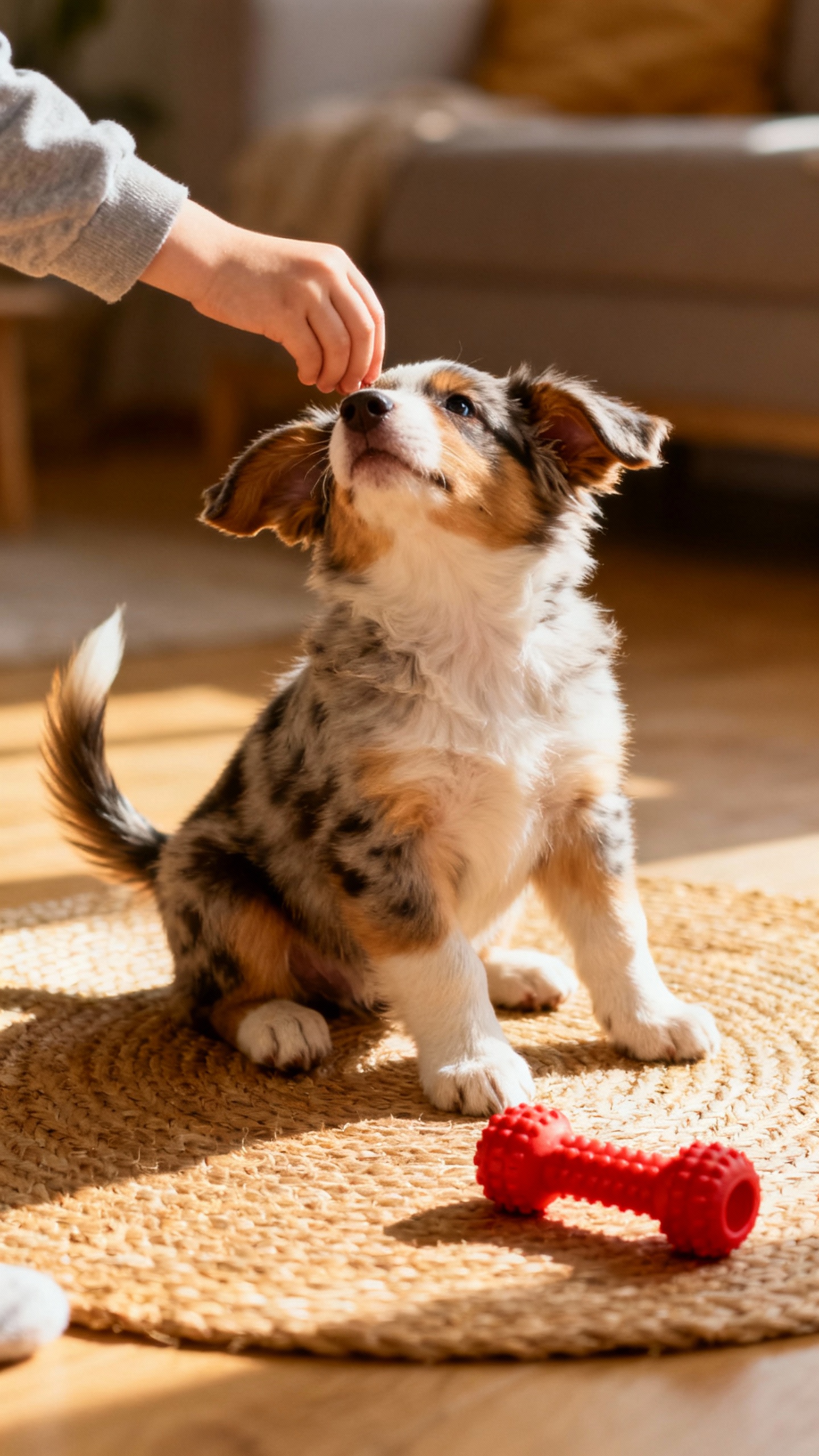
Tip 2: Nail the Foundations Early (And Keep It Fun)
Focus on the essentials: sit, down, stay, come, leave it, and loose-leash walking.
Keep sessions fast and upbeat to match your puppy’s attention span. Try these quick-win games:
- Recall relay: Two people call the pup back and forth. Reward every sprint.Make it a family sport.
- Name game: Say the pup’s name once. When they look at you, reward. This builds quick focus anywhere.
- Loose-leash “red light, green light”: When the leash tightens, stop.When it loosens, go. Your pup learns that pulling gets them nowhere.
Marker training 101
Use a clicker or a marker word like “Yes!” to mark the exact moment your pup does the right thing. Timing matters. Reward within a second or two.
You’ll look like a dork at first. It works anyway.
Tip 3: Channel the Herding Instinct (So Your Kids Survive)
Aussies herd because biology says so. You won’t “train it out,” but you can redirect it. – Teach boundaries: Reward calm behavior around children, bikes, and running feet. – Offer alternatives: Tug with rules, flirt pole sessions with a clean “drop,” fetch with impulse control (sit before you throw). – Play targeting games: Teach “touch” to your hand.
You can use it to interrupt nipping or chasing and reset focus.
Nipping solution
When teeth land on skin: stop play, go neutral, and offer a chew toy. Reward when your pup chooses the toy. Consistency beats drama.
IMO, squealing like a littermate can hype them up—calm redirection works better.
Tip 4: Socialize Smart (Quality Over Chaos)
Socialization isn’t a puppy free-for-all at the dog park. It’s controlled exposure to people, dogs, sounds, surfaces, and places with lots of positive associations. – People: Hats, wheelchairs, kids with scooters—feed tiny treats while your pup observes. – Dogs: Choose polite puppy pals or well-mannered adult dogs. Keep interactions short and friendly. – Environments: Vets, groomers, hardware stores that allow dogs.
Pair every new thing with food and praise. If your pup looks unsure, create distance, feed treats, and keep sessions short. You’re building confidence, not testing bravery.
Tip 5: Make Enrichment a Daily Habit
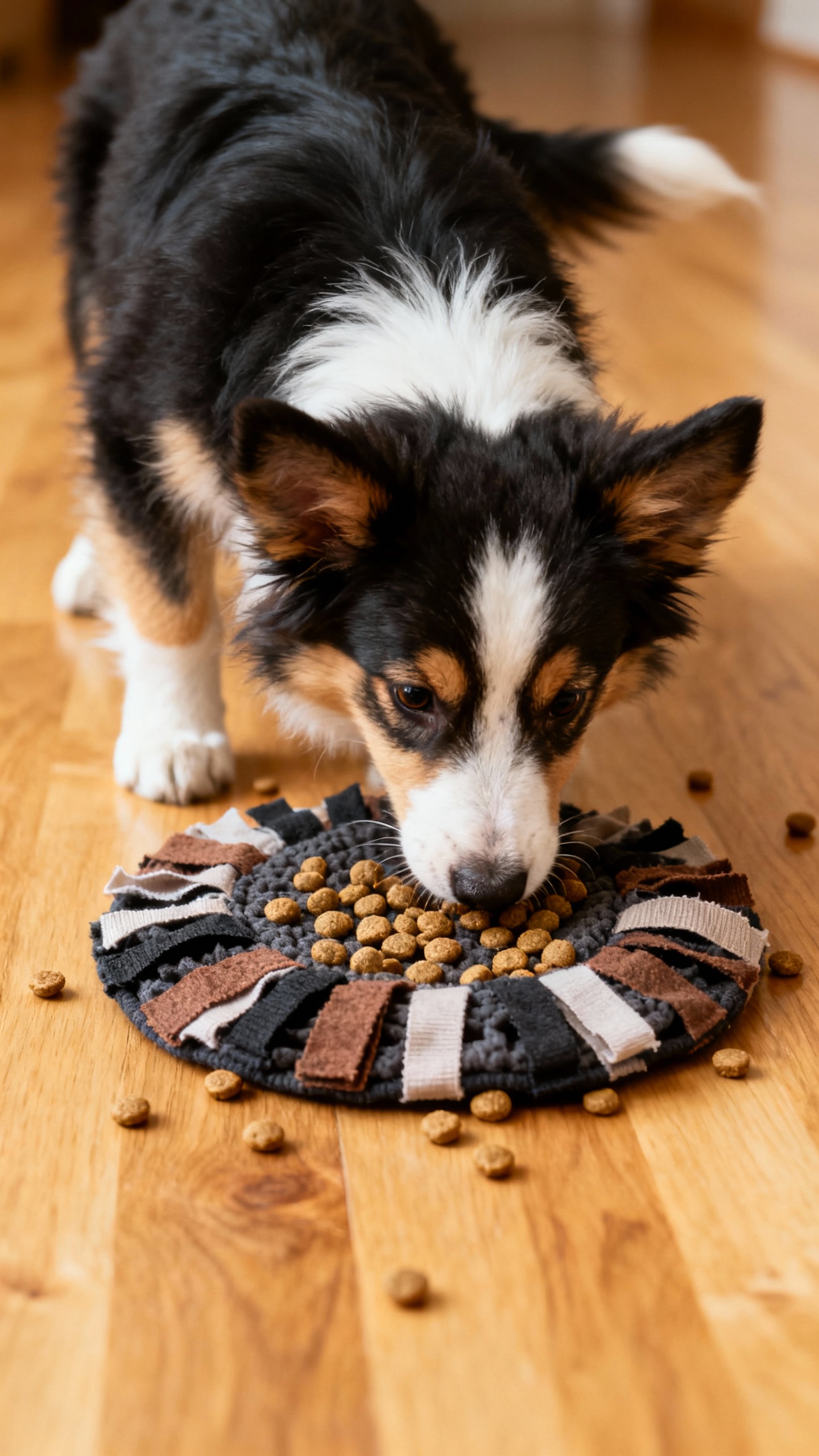
Aussie puppies thrive with brain games. Enrichment buys you quiet time and reduces destructive behavior.
Great options:
- Food puzzles: Kongs, snuffle mats, slow feeders.
- DIY scent games: Hide treats around a room and say “Find it!”
- Shred boxes: Hide kibble in a box stuffed with paper. Supervise the enthusiastic confetti party.
- Training toys: Treat-dispensing balls that reward nudging and rolling.
Rotate toys every few days to keep them novel. Novelty = interest.
Interest = less shoe murder.
Tip 6: Teach Settle Skills (Your Secret Superpower)
High-drive pups need an off switch. You can teach it—promise. – Mat training: Lure your pup onto a mat, mark “Yes,” and treat. Build duration.
Add a cue like “Place.” – Calm reinforcement: Reward quiet, relaxed behavior. Ignore pushy antics. – Stationing during chaos: While kids play, send your pup to the mat with a chew. Repeat daily until “Place” becomes automatic.
Crate and playpen = sanity
Crates aren’t punishment—they’re bedrooms.
Feed meals inside, toss treats in randomly, and add cozy bedding. Short sessions at first. Use a playpen for supervised freedom when you need two hands for life.
Tip 7: Make the Whole Family Part of the Team
Inconsistent rules confuse Aussies and slow training. Write down your cues and rules so everyone matches.
Agree on:
- What behaviors earn attention (four paws on the floor, quiet sits).
- Which words mean what (“Down” for lie down? Use “Off” for furniture.)
- Where the dog sleeps, eats, and chills.
- Who handles morning potty, walks, and evening training blocks.
Kids can help with simple jobs like feeding, “name game,” and “touch” practice. It builds trust on both sides.
Fitness Ideas for Active Families
You bought an Aussie because you move—so use it. – Hiking and trail work: Start with short, joint-safe distances.
Teach “wait” at turns and “this way” for direction changes. – Beginner agility at home: Low bars, tunnels, wobble boards. Keep it playful and low-impact until 12–18 months. – Urban adventures: Farmer’s markets, patio hangs, park picnics—great for social skills with built-in distractions. – Structured fetch: Add cues: sit, eye contact, release to chase, “drop,” and end on a calm “Place.” That’s control disguised as fun, FYI.
When to rest
Puppies need lots of sleep—up to 18 hours. Over-tired Aussies act wild, then crash hard.
Schedule naps like you would for a toddler. Protect the brain.
Common Mistakes to Dodge
– Over-exercising too soon: Joints need time. Choose varied, low-impact play early on. – Letting the dog rehearse bad habits: Prevent chasing cars, herding kids, and door dashing from day one. – Inconsistent cues: One cue per behavior keeps your smarty-pants dog from freelancing. – Skipping mental work: Physical exercise alone won’t cut it.
Puzzle + training + play = balance.
FAQs
How long should training sessions be for an Aussie puppy?
Keep it short and sweet: 3–7 minutes, a few times per day. End while your pup still wants more. Several micro-sessions beat one marathon, and you’ll see faster progress with fewer meltdowns.
When can I start off-leash training?
Start recall games immediately at home and in fenced areas.
Layer distractions slowly. Use a long line outdoors until your recall hits 90%+ reliability. Off-leash freedom is earned, not assumed—especially with a motion-sensitive herding breed.
How do I stop my Aussie puppy from herding my kids?
Manage the environment first: leashes, gates, or pens during high-energy play.
Teach “touch,” “leave it,” and “place,” then reward like crazy for choosing those instead of chasing. Give your dog structured outlets (tug, fetch, flirt pole) so the herding drive has somewhere to go.
What’s the best reward for training?
Use a mix: soft, high-value treats for tough distractions, kibble for easy reps, and play for big wins. Many Aussies go wild for tug.
IMO, rotating rewards keeps them guessing and engaged.
Do Aussies do well with crates?
Yes—if you introduce the crate positively. Feed meals inside, toss surprise treats, and give safe chews. Keep early sessions short and end on success.
If your pup struggles, downshift: door open, mat inside, treat for calm. Build from there.
How do I prevent separation anxiety?
Normalize short absences early. Scatter a few 1–5 minute departures throughout the day, then gradually stretch them.
Pair alone time with a special chew or stuffed Kong. Don’t make dramatic exits or entrances—act like it’s no big deal.
Conclusion
Raising an Australian Shepherd puppy feels like training a tiny athlete with a PhD. They’ll test your reflexes and your patience—and they’ll reward your effort with ridiculous loyalty.
Build routines, feed their brain, teach an off switch, and make training a family sport. Do that, and you’ll have the trail buddy, cuddle monster, and all-around legend you wanted. IMO, that’s a pretty sweet trade.
I’ve spent 10+ years in dog training, digging into what makes dogs (and their humans) tick. At Smart Dog Learning, I share my no-nonsense, fun approach to training so you can enjoy life with a well-behaved, happy pup—no boring lectures, just practical results 😉