
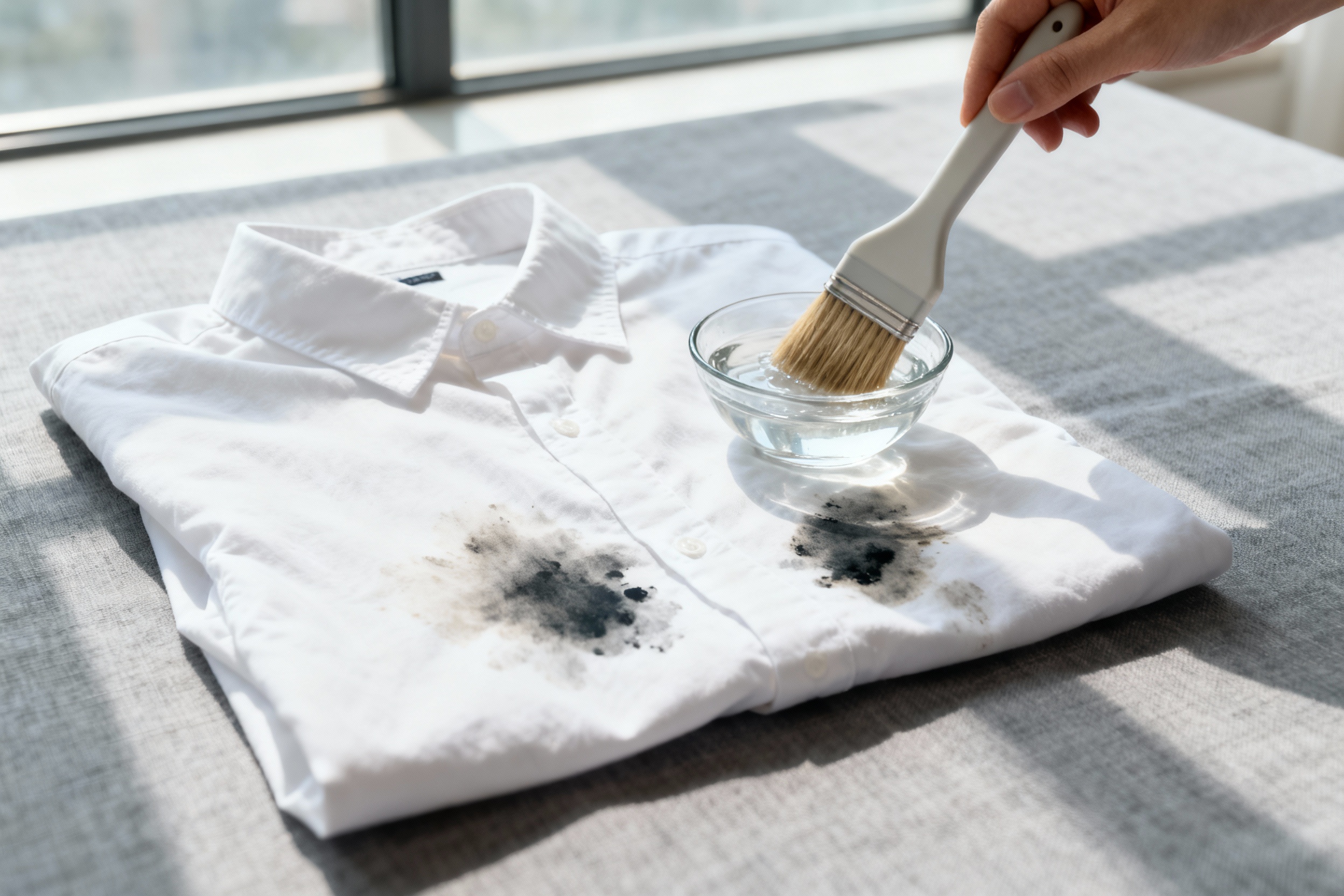
5 Tips To Remove Dark Stains From White Clothes
White shirts attract stains like moths to a porch light. One coffee spill, one mystery smudge, and boom—your crisp look turns “questionable.” Good news: you can rescue those whites without turning laundry day into a crime scene. Here’s how to banish dark stains fast, with stuff you probably already own.
Act Fast: Speed Beats Set-In Every Time
Stains love to settle in.
Don’t let them. Treat the spot as soon as you notice it so it doesn’t become your shirt’s new permanent feature.
- Blot, don’t rub. Press the stain with a clean cloth or paper towel. Rubbing grinds the pigment deeper.
- Rinse with cold water first. Hot water can set proteins and dyes.
Cold water keeps the stain “loose.”
- Keep it damp. If you can’t treat it immediately, dab with water to prevent drying. Dried stains = tougher life choices.
When You’re Out and About
Carry a stain pen or wipes if you’re spill-prone. No pen?
A dab of hand soap and water buys time. FYI: club soda helps with fresh stains, but it’s not magic—still pre-treat later.
Pre-Treat Smart: Target the Stain Type
Different stains need different tactics. You wouldn’t use a hammer to butter toast, right?
Same logic here.
- Grease and oil (makeup, salad dressing): Sprinkle baking soda or cornstarch to absorb oil for 10–15 minutes. Brush off. Then apply dish soap (the grease-cutting kind), gently work it in, and rinse.
- Ink and dye (pen, dark juice): Dab with rubbing alcohol using a cotton ball, working from the outside in.
Place a paper towel under the fabric to catch the transfer.
- Food and drink (coffee, soy sauce): Mix 1 tsp dish soap + 1 tbsp white vinegar + 1 cup cool water. Dab and blot until the stain fades. Rinse.
- Deodorant and sweat: Make a paste of baking soda and water (3:1).
Spread on, wait 30 minutes, then rinse.
Test First, Always
Patch test any solution on an inside seam. Bleach-like effects on “white” shirts happen more often than you think, especially with optical brighteners or prints.
Use Oxygen Bleach, Not Chlorine (Most of the Time)
If you want a bright white without risking yellowing or fabric damage, oxygen bleach (like Oxi-type products) wins. It lifts stains gently and works on most fabrics.
- How to use: Dissolve oxygen bleach in warm water (check the package), then soak the garment 1–6 hours.
For stubborn stains, soak overnight.
- When to avoid: Silk, wool, and leather don’t like oxygen bleach. Treat those with stain-specific products or send to dry cleaning.
- Bonus tip: Add oxygen bleach to the wash for white loads as a preventive move. Preemptive strikes are fun.
The Chlorine Bleach Exception
Chlorine bleach handles some dye-based stains but can yellow synthetics and weaken cotton fibers.
If you use it:
- Check the label says “chlorine-safe.”
- Dilute properly; never pour directly on fabric.
- Rinse thoroughly and avoid mixing with ammonia or vinegar (dangerous fumes).
Try the Enzyme + Detergent Combo
Enzymes break down the gunk that clings to fibers. If your “white” tee looks gray or dingy with mystery darkness, enzymes are your secret weapon.
- Choose an enzyme detergent. Look for “protease,” “amylase,” or “lipase” on the label.
- Pre-soak: Mix a scoop of enzyme detergent in cool water, soak 30–60 minutes, then wash normally.
- Double-clean the collar and cuffs: Work a little detergent directly into grimy bands before washing.
Make a Simple Paste for Spot Work
For super stubborn spots, mix a tiny bit of enzyme detergent with a few drops of water into a paste. Apply, wait 15 minutes, and rinse.
IMO, this beats most “miracle” sprays.
Leverage Pantry MVPs: Vinegar, Baking Soda, and Hydrogen Peroxide
Household heroes can do a lot (and they’re cheap). Use them wisely so you don’t accidentally create experimental art on your shirt.
- White vinegar (5%): Great for lifting dark residues and deodorizing. Soak stains in a 1:3 vinegar-to-water mix for 30 minutes, then rinse.
- Baking soda: Mild abrasive + deodorizer.
Make a paste (3:1) for armpit stains or rub gently into damp fabric to lift residues.
- Hydrogen peroxide (3%): A gentle whitener. Dab on dark stains after pre-treating, wait 10 minutes, then rinse. Works well on wine, berry, and blood (cold water first!).
Peroxide + Dish Soap Hack
For gnarly stains, mix 1 part 3% hydrogen peroxide + 1 part dish soap.
Apply, wait 10–15 minutes, then rinse and launder. Don’t use on wool/silk, and test on prints. FYI: sunlight can amplify peroxide’s whitening, so air-dry in indirect light if you’re nervous.
Wash Right: Temperature, Cycle, and Drying Matter
You did the pre-work; don’t sabotage it in the wash.
Settings decide whether the stain leaves or gets a forwarding address.
- Temperature: Start cool for fresh stains. After pre-treatment, wash warm or hot if the fabric label allows. Hot water helps lift oils and dye residue.
- Cycle: Normal cycle for sturdy cottons; gentle for delicate fabrics.
- Detergent dose: Use enough.
Too little leaves soil behind; too much leaves residue that traps dirt.
- Skip the dryer until you’re sure. Heat sets stains. Air-dry first. If the stain’s gone, then tumble as needed.
Add-Ins That Actually Help
– Water softener (or a bit of washing soda) boosts detergent in hard water. – Oxygen bleach booster for white loads keeps them bright long-term. – Mesh bags protect delicate whites so you can use a stronger wash without shredding them.
Advanced Fixes for Stubborn Dark Stains
Sometimes stains fight back.
You’ve got options.
- Repeat the pre-treat + soak cycle. Two rounds often beat one aggressive attempt.
- Color remover for dye transfer. If a dark sock attacked your whites, use a dye remover labeled safe for whites (not chlorine bleach!).
- Bluing agents. These add a tiny blue tint that visually cancels yellowing and grayness. Follow directions closely—less is more.
- Professional help. For silk, wool, or heirlooms, a pro cleaner can spot-treat without drama.
FAQ
Can I use bleach on all white clothes?
Nope. Chlorine bleach can weaken fibers and yellow synthetics. Use oxygen bleach for regular whitening and only use chlorine bleach on bleach-safe cotton after checking the care label.
When in doubt, test first.
How do I remove set-in stains that survived the dryer?
Rehydrate the stain with cool water, apply enzyme detergent or a peroxide–dish soap mix, and let it sit 15–30 minutes. Then soak in oxygen bleach for a few hours and rewash. It won’t fix every stain, but IMO it saves a surprising number.
Does hot water always make stains worse?
Not always.
Hot water can set protein stains early on, but after pre-treating, hot water often helps lift oils and dye residue—as long as the fabric can handle it. Check the label and the stain type.
Will vinegar and baking soda together clean better?
They foam dramatically, but the combo mostly cancels out. Use them separately for best results: vinegar for deodorizing and dissolving residues, baking soda for gentle abrasion and odor control.
How do I get deodorant marks off a white shirt quickly?
Rub the mark with a dry towel or a pair of nylon tights to lift the residue, then spot-treat with a bit of dish soap and water.
For yellowed pits, use a baking soda paste or enzyme soak before washing.
Is hydrogen peroxide safe on all whites?
Peroxide (3%) is generally safe on most white cottons and linens. Still, patch test on trims, prints, and blended fabrics. Avoid on wool or silk.
Wrap-Up: Keep Whites Bright Without Losing Your Cool
Dark stains don’t own your wardrobe.
Treat fast, match the method to the mess, and lean on oxygen bleach, enzymes, and a few pantry favorites. Double-check before drying, and you’ll keep those whites looking smugly spotless. Laundry may not spark joy every time—but clean, bright shirts?
That’s a tiny victory worth bragging about, FYI.

I’ve spent 10+ years in dog training, digging into what makes dogs (and their humans) tick. At Smart Dog Learning, I share my no-nonsense, fun approach to training so you can enjoy life with a well-behaved, happy pup—no boring lectures, just practical results 😉